
Bracket sourcing needs
We travel to Pleasant Valley from Morgantown, about 17 miles out, so we plan the bracket check into the same trip rather than treating it as a surprise.
Pleasant Valley, Morgantown
Pleasant Valley homes date to a 1972 median build year, a decade older than Morgantown's typical stock. That gap changes the opener bracket, the door weight, and the retrofit.
The repair
Pleasant Valley's median home dates to 1972, about a decade ahead of the 1983 median across the wider Morgantown service area. That gap matters more than it sounds.
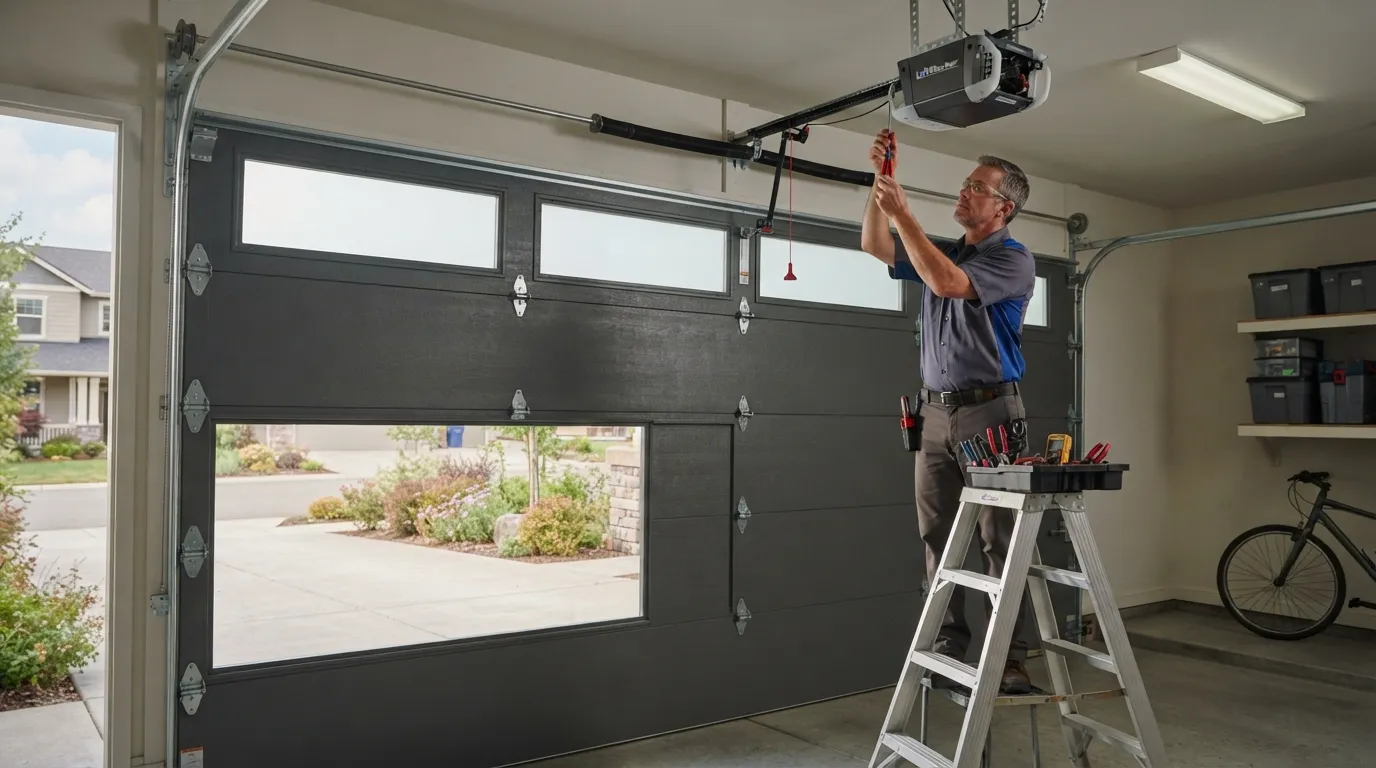
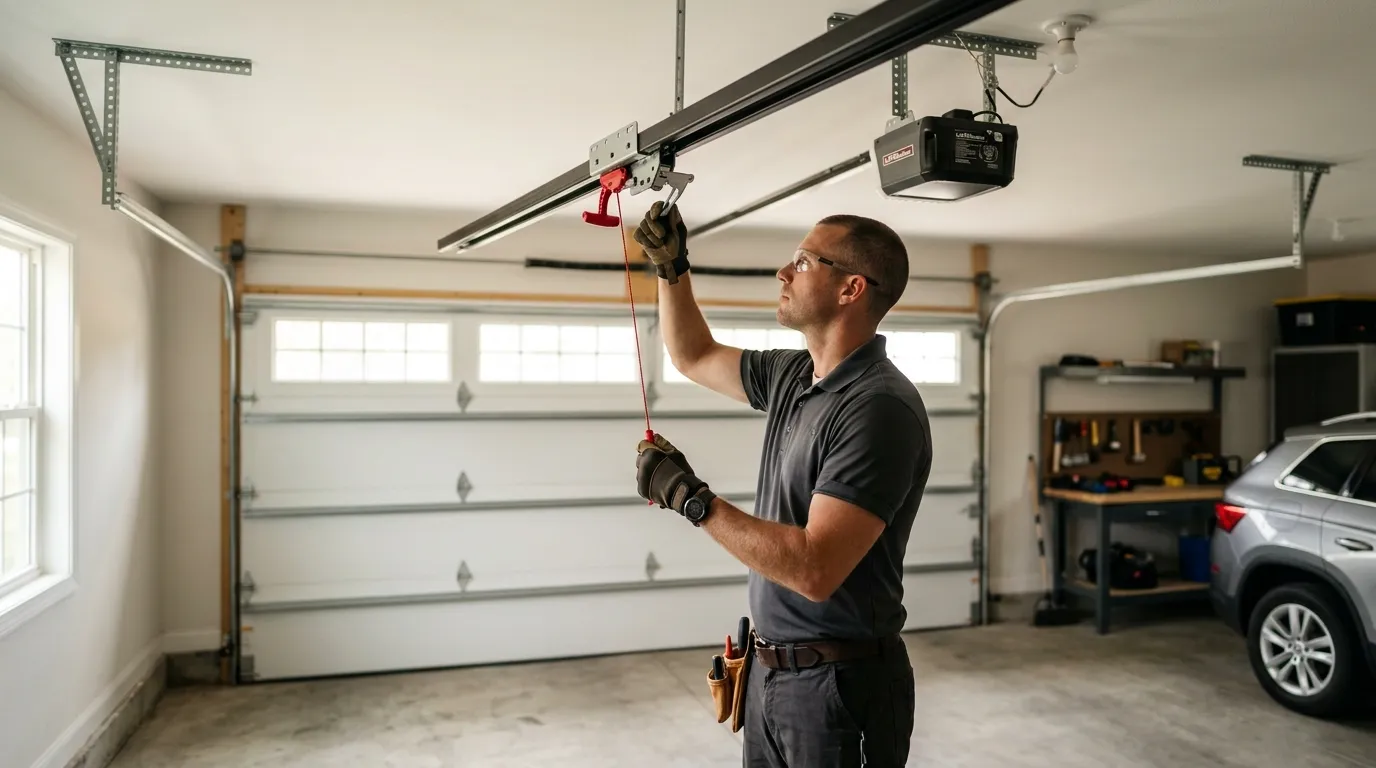
A door built in the early 1970s was almost never engineered with an opener bracket in mind - those brackets became standard later, once chain-drive units were common on new construction. So the first job on most Pleasant Valley installs isn't hanging the opener.
It's fabricating or reinforcing a header bracket that will actually hold the unit's pull, and often swapping out a top fixture that was never meant to carry motorized load. We also check the door itself before we touch the opener. A lot of these doors are original or close to it, with track and hinges sized for hand lifting, not a motor doing the work every day.
If the door binds, sags, or the rollers are shot, we say so before we mount anything - putting a new opener on a door that can't move freely just transfers the strain to the motor, and you'll be back to square one in a year.
That's not a sales pitch, it's what keeps the install from failing early. We don't stock every bracket style for every era of door, so if your unit is unusual we may need to source a part before we can finish the job.
Timing
A straightforward opener swap on hardware that's already sound is a same-visit job. Where Pleasant Valley differs from newer construction is the bracket and header work described above - on a house built around 1972, that reinforcement adds real time to the visit, and we won't rush it because it's the part that fails first if it's done wrong.
We travel to Pleasant Valley from Morgantown, about 17 miles out, so we plan the bracket check into the same trip rather than treating it as a surprise.
If we find the door track itself is worn beyond what a bracket fix can support, we'll tell you on site rather than mount a motor on a door that isn't ready for it.
We don't give a blanket hours estimate here because the header condition varies house to house even within the same build decade - that's the one thing we can't quote until we're standing in front of it.
Pricing
We don't have a fixed number to publish for Pleasant Valley, and we'd rather say that than guess. What we can tell you is what drives the cost here specifically: the bracket or header reinforcement common to 1970s-era doors is additional labor beyond a standard swap, and it's the line item that separates a Pleasant Valley job from a newer-build install elsewhere in the service area.
Household income in this area runs a little under the wider service area median - $58,456 here against $60,791 across the full Morgantown coverage area - and we keep that in mind when we walk you through options rather than pushing a single tier of opener.
A basic chain-drive unit costs less to install and to run than a belt-drive with battery backup, and for a lot of these older doors the chain drive is a fine match for the load anyway.
Ask us for a walk-through quote before the visit if you want the bracket question answered ahead of time - we can often tell from a couple of photos whether reinforcement is likely.
Local causes
This area sits in a cold-climate band with severe seasonal swings, and that shows up hardest on openers mounted to older, unreinforced headers. Cold contracts wood and metal fasteners at different rates; on a bracket that was already marginal for a 1972-era door, a few winters of that cycling is often what finally works a lag bolt loose or cracks a header board that looked fine in summer.
The other pattern we see across this stretch of the service area, which covers 20,663 households and 10,952 owner-occupied houses built mostly in the 1980s and 90s, is that Pleasant Valley's older stock skews the failure mode toward structural fixture problems rather than pure electronics. Newer-build openers in the wider area tend to fail at the circuit board or sensor; here, we're more often called out for an opener that's still running but has worked its mount loose, or a door that's started binding because the track shifted with the header.
We can't promise a specific timeline before a failure like this shows up - that depends on how the original install was done, and we don't have records on individual houses. What we can say is that if your opener is original to a 1972-era house, a bracket check is worth doing before it fails outright, not after.
Questions
Not always. A lot of Pleasant Valley homes built around 1972 have headers that weren't designed for a motorized bracket, so we usually need to reinforce or replace the mounting point before the opener goes up. We check this before quoting the job, not after we've already started.
No. We're based in Morgantown and travel out to Pleasant Valley, about 17 miles, for installs and service calls. There's no local depot, so we schedule the drive time into the visit rather than promising a fixed arrival window.
For most doors from the early 1970s, yes. These doors were built for hand lifting, not heavy load, and a chain drive matches that weight fine. A belt-drive costs more to install and run, and the quieter operation isn't worth much if the door itself is the noisier part of the system.
On older, unreinforced headers, cold-season temperature swings cycle the wood and fasteners at different rates, which gradually works mounting bolts loose. It's a common pattern on 1970s-era construction in this climate band and usually means the bracket needs reinforcing, not just retightening.
Explore more
Ready when you are
Morgantown Garage Door Pros repairs and installs garage doors, springs and openers in Morgantown, WV and the surrounding area.