What the Weather Here Does to It
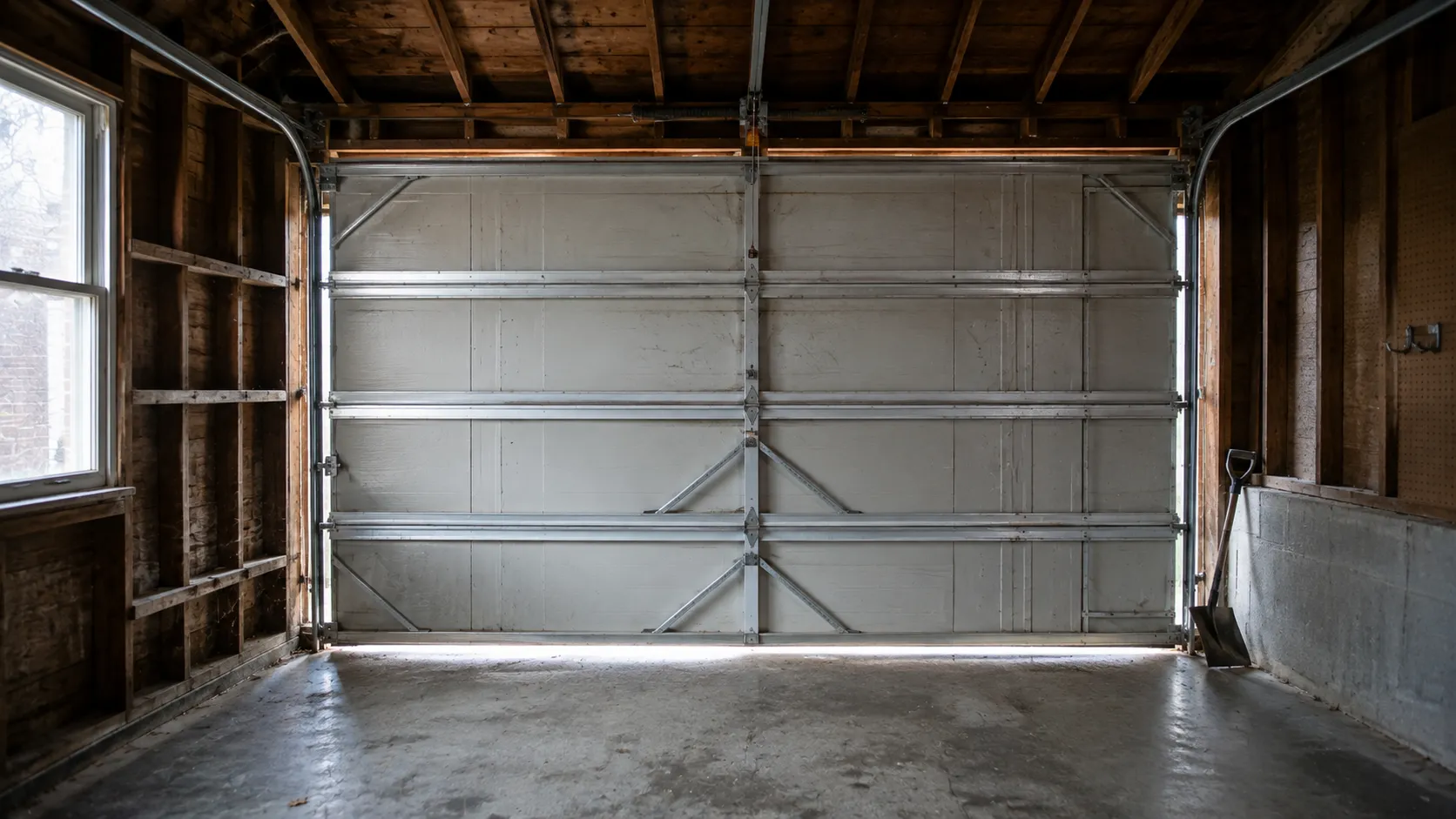
Morgantown sits in a severe cold climate band, and that matters more to a garage door than most owners think. Steel torsion springs lose tension as temperatures drop, so a spring that felt fine in September can leave a door heavy and slow by January. Nylon rollers and weatherstripping stiffen and crack in the cold, and if your house was built in the 1980s or 90s - which covers most of the stock across the eleven areas we work in - there's a decent chance the original hardware has seen thirty-plus winters of that cycle. Lubricant that's fine in summer gums up when it's cold, which is often the real reason a door starts groaning on the first hard freeze. None of this is dramatic on its own. It's cumulative. A spring rated for a certain number of cycles doesn't care what season it fails in, but cold weather pulls that failure earlier, and it tends to happen on the coldest morning of the year, when you're already late and the door won't budge.
When It Stops Being a DIY Job
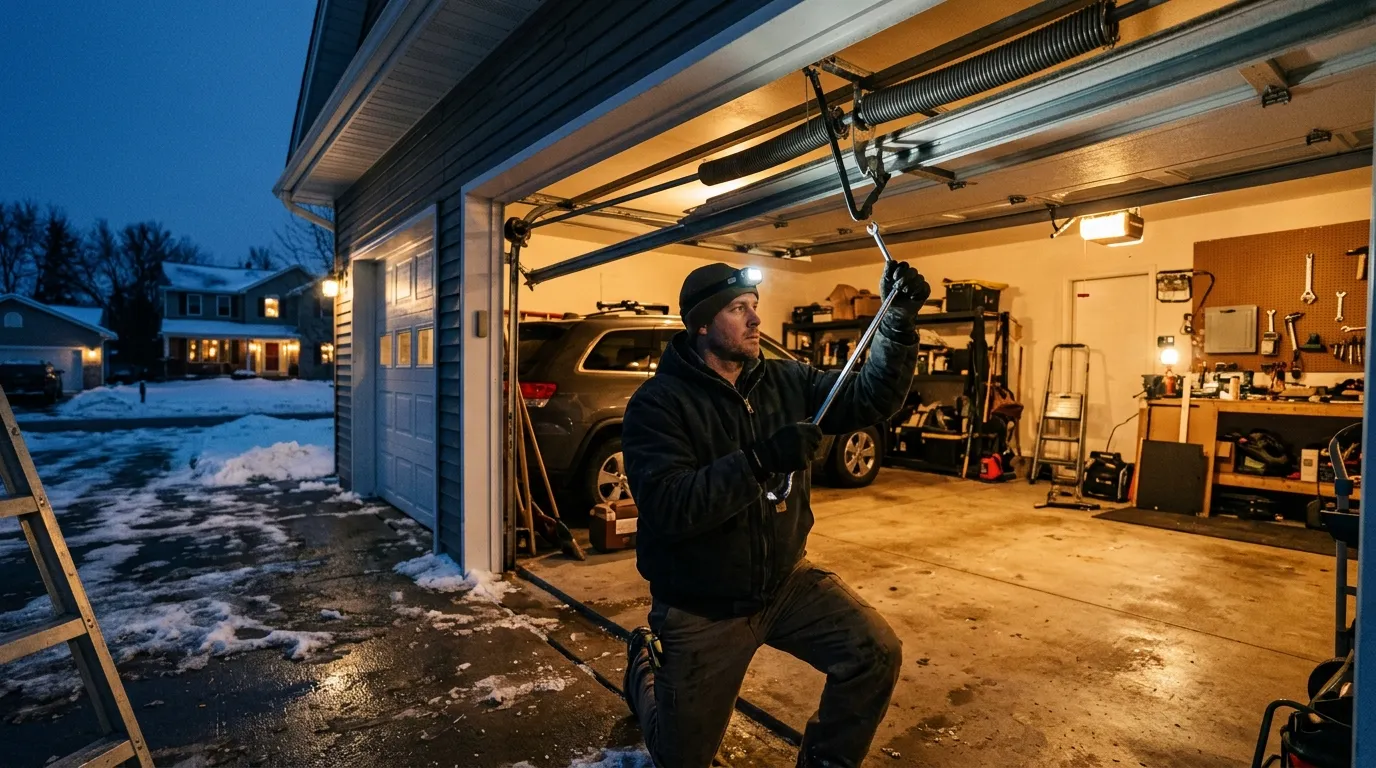
If your house dates to the earlier end of our range - anywhere near 1938 through the 1960s - you may still have a torsion spring system that predates the safety cable retrofits common on newer setups. That's not a job to open up yourself. A spring under tension that lets go can break a hand or worse, and on older housing stock the mounting hardware itself may not match what's sold today, which means a repair that looks simple can turn into a hunt for parts. Track misalignment on a door that's 20-30 years old, from the bulk of the 1980s-90s stock in this area, is another one to leave alone - by the time a track is visibly bent, the rollers and bearings around it are usually compromised too, and forcing the door through a cycle can pull the whole assembly loose from the header. If a repair means removing panels, disconnecting the opener, or touching anything under spring tension, that's the line. Past that line, it's a call to someone who does this daily, not a Saturday project.
When Waiting Is Fine
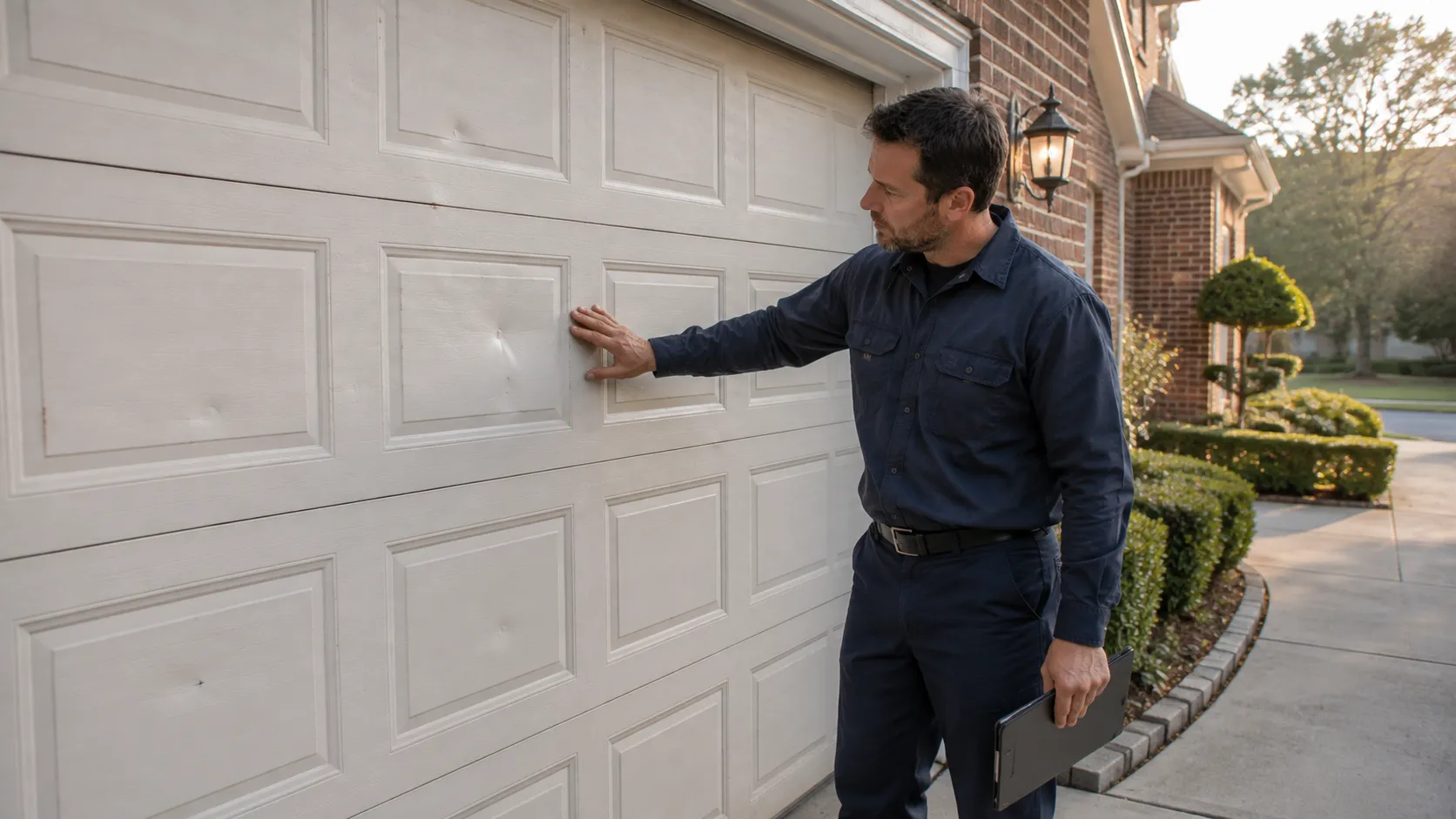
Not everything needs a truck out that day. A single squeaky roller, a door that's slightly noisier than usual but still opens and closes smooth and level, or weatherstripping that's just started to curl at the edges - those can wait for a scheduled visit rather than an emergency call. If the door still travels the full track without binding and the opener isn't straining, you likely have weeks, not hours. This is worth knowing because with 10,952 owner-occupied houses across this service area, most in the same age bracket, a lot of doors are aging on a similar timeline, and not every one of them needs a rush. Save the urgent call for when the door won't move at all, drops unevenly, or a cable looks frayed. Everything else can go on the list.
The Problem
Some noises mean something, and they're worth learning to tell apart. A rhythmic thump once per rotation is usually a flat spot on a roller - annoying, not urgent. A sharp bang followed by a door that won't lift is almost always a broken spring, and that's the classic failure point on hardware from the older end of our 1938-2008 housing range once the cold sets in. Grinding that gets louder over weeks points to a bearing plate wearing out, common on the 1980s-90s stock across the named areas we cover. A door that reverses on its own mid-close is an opener sensor or force-setting issue, not a spring problem, and shouldn't be treated like one. We won't tell you every noise needs a service call - a lot of them are just age talking - but we can't give you a wiring diagram for your specific opener over the phone either. That's the honest limit: we can help you sort urgent from ignorable, but final diagnosis on anything electrical or spring-related happens in person, with the door in front of us. [See more](/).
Talk to a local pro
Garage door trouble in Morgantown?
Same-day service with honest, upfront quotes.