What the Weather Here Does to It
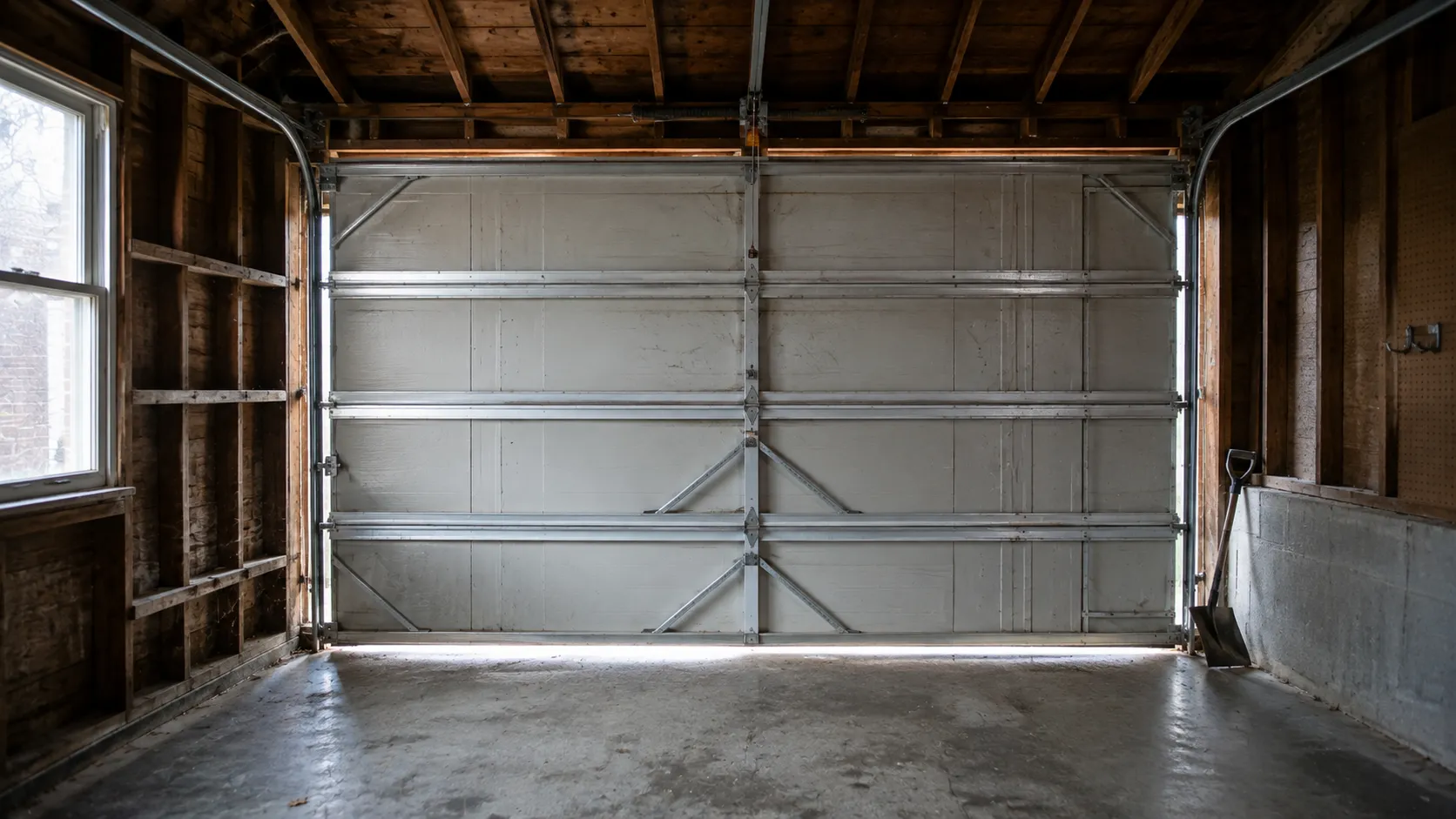
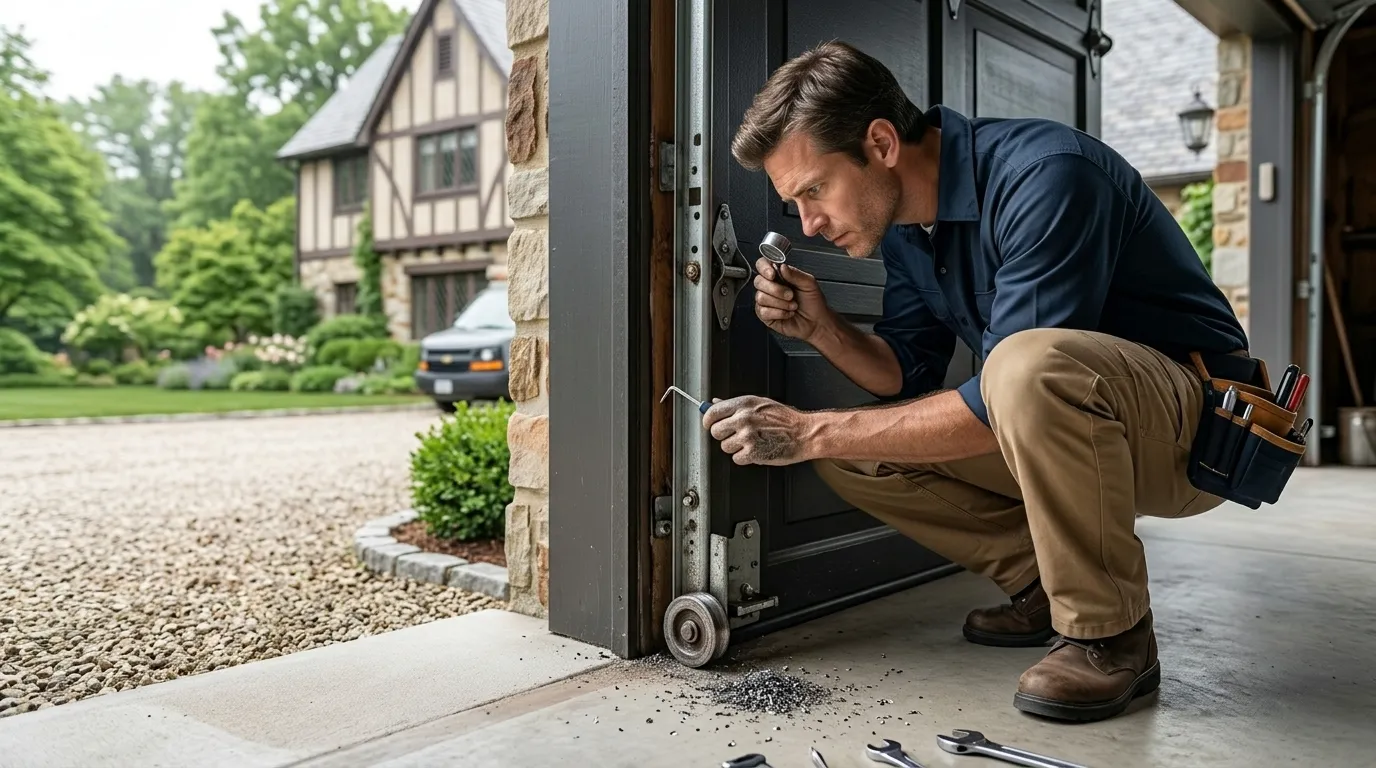
Morgantown sits in a severe cold band, and that shows up in the garage before it shows up anywhere else in the house. Torsion springs lose tension faster in repeated freeze-thaw cycles, and steel tracks contract enough in a hard cold snap that rollers start binding at the exact spots they never bound at in October. Most of the housing stock here was built between 1938 and 2008, with the bulk going up through the 1980s and 90s across the area's eleven named neighborhoods - which means a lot of doors still running on the original galvanized hardware that was standard for that era. That hardware wasn't built for the duty cycle a 30-40 year old spring sees today. On a service call, we check spring wind and cable wear first, because in this climate those two parts fail before anything else does. Weatherstripping on doors from that build era also compresses and cracks with age, letting cold air and moisture into the track channel, which accelerates rust on rollers and hinges. None of this is dramatic. It's just what cold does to steel and rubber, year after year, on a door that was never rated for it.
When It Stops Being a DIY Job
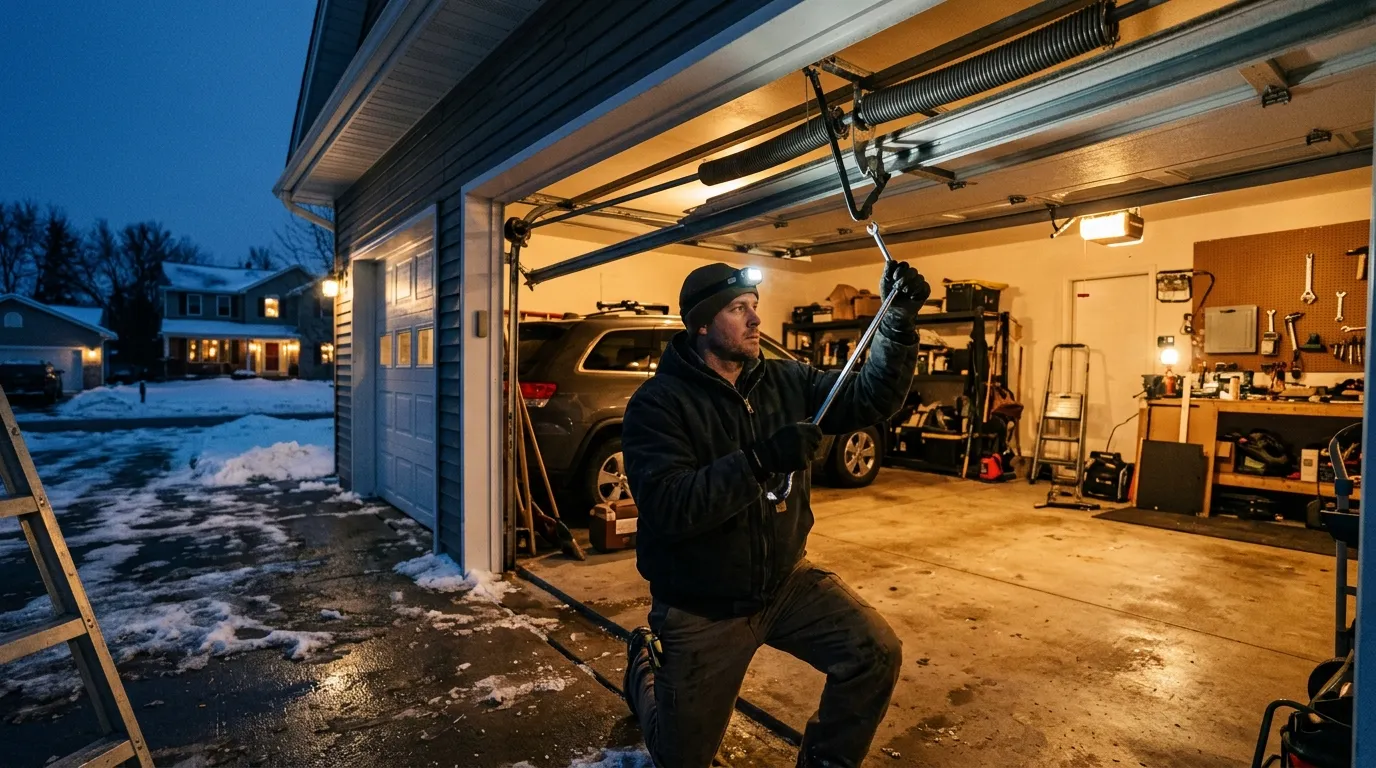
A torsion spring under load can put a person in the hospital, and that's true on a starter-home door from 1975 or a newer build from 2005 - the age of the house doesn't change the physics. If a spring has snapped, if a cable has frayed, or if the door won't stay up on its own, that's a call, not a project. Given the median build year here sits around 1983, a lot of these systems are old enough that the fasteners have corroded into the frame, and what looks like a five-minute bolt swap turns into stripped threads and a trip for the right hardware. We also see openers original to houses built in that median-1983 window still limping along - if the logic board or gear set is original, DIY troubleshooting usually just delays a part failure that's already in progress. If you're not sure which category your problem falls into, that uncertainty itself is the signal to call.
When Waiting Is Fine
Not every noise or stiff spot needs same-day attention. A door that's a little sluggish on a cold morning but closes flush and reverses properly on the safety sensor is usually fine to wait on, especially outside the worst of the cold-band months. A cosmetic dent in a panel, a squeaky roller that hasn't seized, a keypad with a weak battery - these can sit on a list. Given median household income in the service area is $60,791, we try to be honest about what's urgent and what isn't, because a $60,000-income household budgeting a repair deserves an accurate answer, not an upsell. If your opener still lifts the door smoothly and the springs show no visible stretching or gaps in the coil, you likely have time to schedule rather than scramble.
The Problem
The honest limitation: we can't always get a matching spring or panel on the truck the same day. Doors built to spec in the 1980s and 90s sometimes used sizes or colors that aren't stocked locally anymore, and matching an odd panel on a 1983-median-era door can mean a short wait on the part. We'll tell you that up front rather than pretend otherwise. Across a service area with roughly 20,663 households and 10,952 owner-occupied houses, we see enough of this housing stock to know which parts move fast and which ones take a few extra days - and we'd rather say that than have you wait for a truck that shows up without the part.
Talk to a local pro
Garage door trouble in Morgantown?
Same-day service with honest, upfront quotes.