
Jamb shimming requirements
Older openings sometimes need the jamb or header shimmed to take a modern door square, and that adds an hour or two we build into the estimate rather than discover halfway through.
Pleasant Valley, Morgantown
New garage door installation for Pleasant Valley homes built mostly in the early 1970s, sized right for cold-climate openers, and quoted from a truck that travels 17 miles from Morgantown.
The repair
Pleasant Valley sits 17 miles out from our shop in Morgantown, and that drive shapes how an installation gets planned before anyone shows up. We don't send a truck out here to eyeball an opening and come back later with the right door.
The measurements, the track length, the header clearance, and the spring size all get worked out ahead of time so the trip counts for something. Most houses in this part of the service area went up around 1972, which is earlier than the broader 1938-2008 spread and 1983 median you'll see across the whole territory.
A door built for a 1972 opening often runs narrower framing and shallower headroom than what a modern steel door and torsion setup expect out of the box. We check that clearance before the door leaves the shop, not after we're standing in the driveway with a box we can't hang.
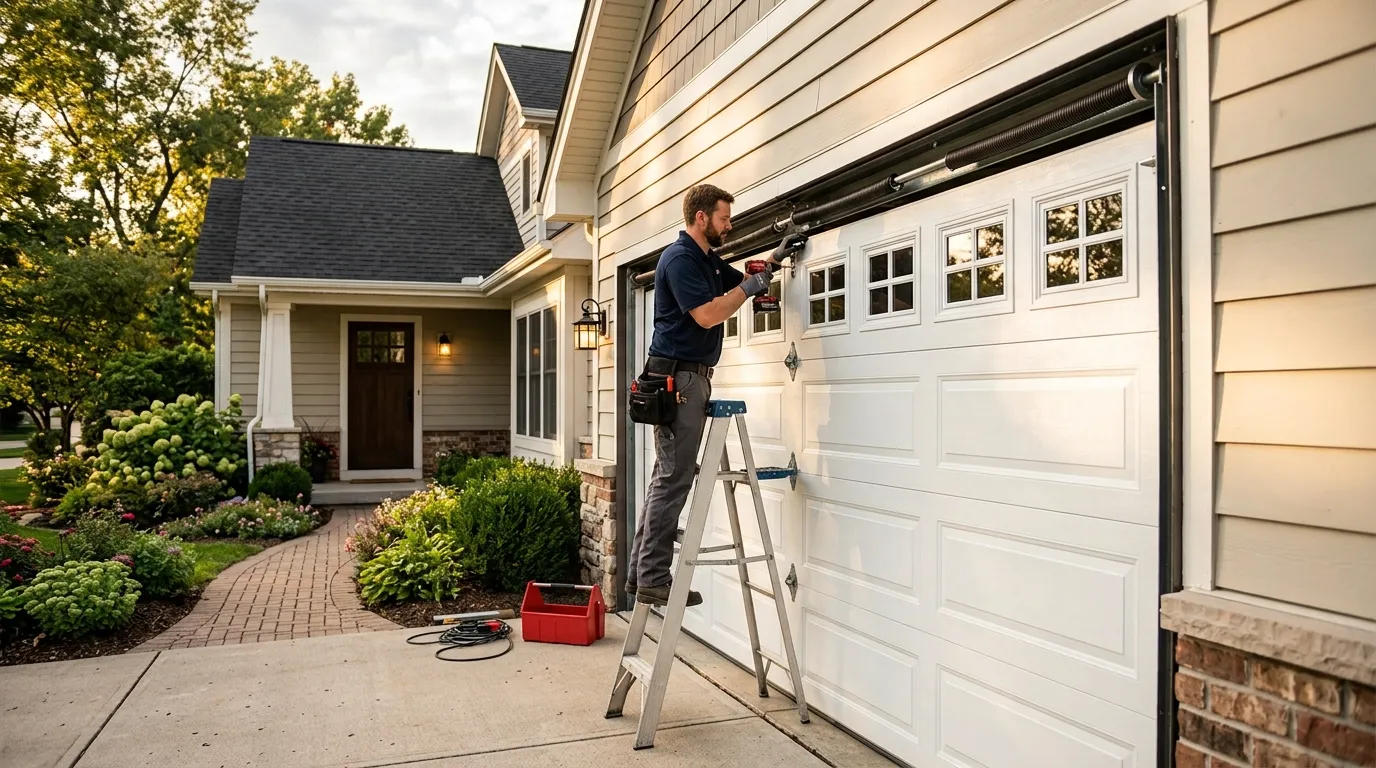
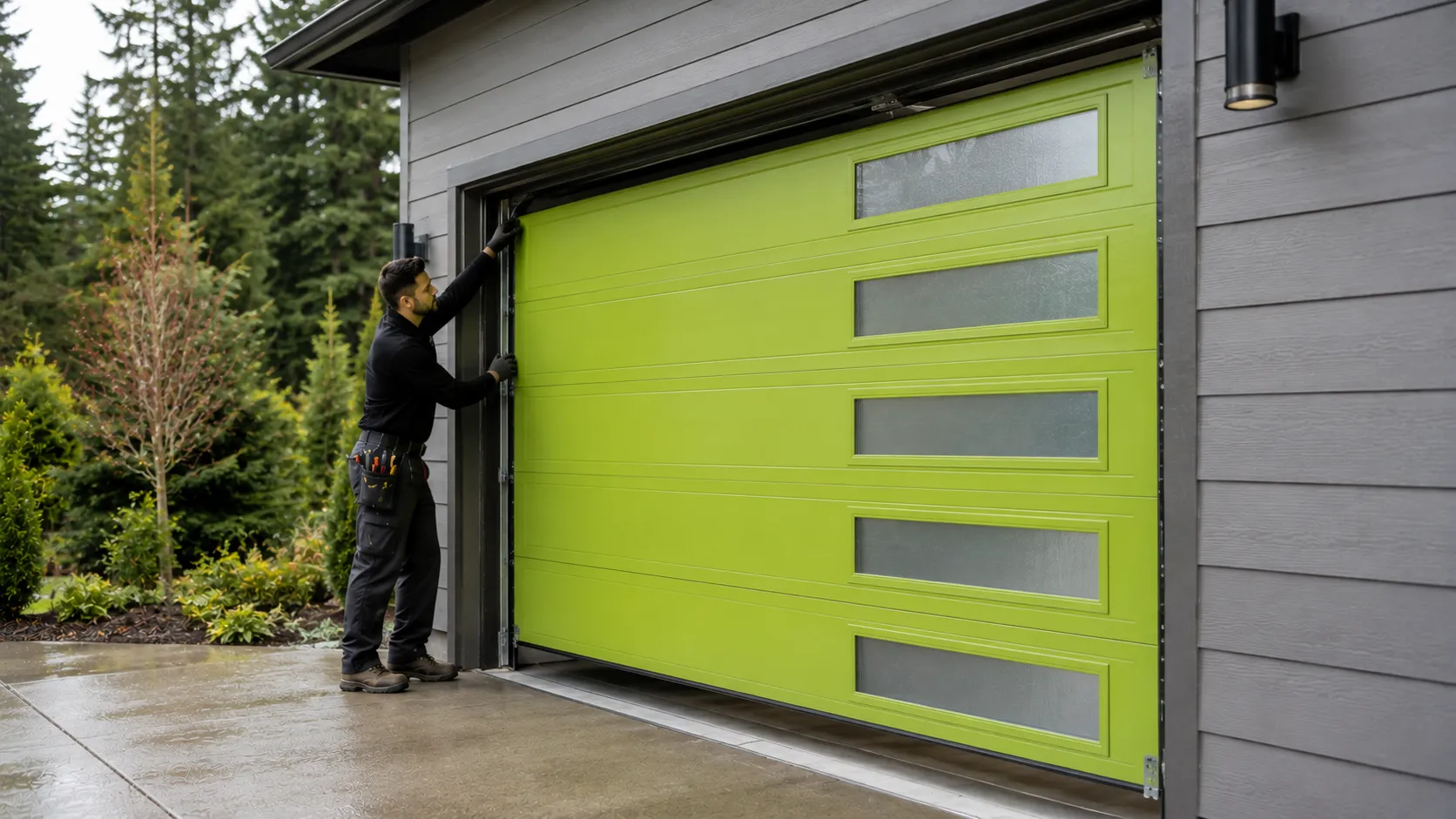
We install insulated steel or aluminum sectional doors matched to the opening, with torsion springs and rollers rated for the cold band this whole region sits in. What we don't do on a 17-mile call is show up hoping the stock size fits and improvise a fix if it doesn't - that's a second trip nobody wants, us included.
Timing
A standard new installation runs a full day on site once the door and hardware are on the truck. Because Pleasant Valley is 17 miles from where we're based, that day gets planned as one trip in and one trip out - we bring the door, the track, the opener, and the spare hardware we might need for a 1972-era opening, since a return trip for a missing part costs more time here than it would on a call five minutes from the shop.
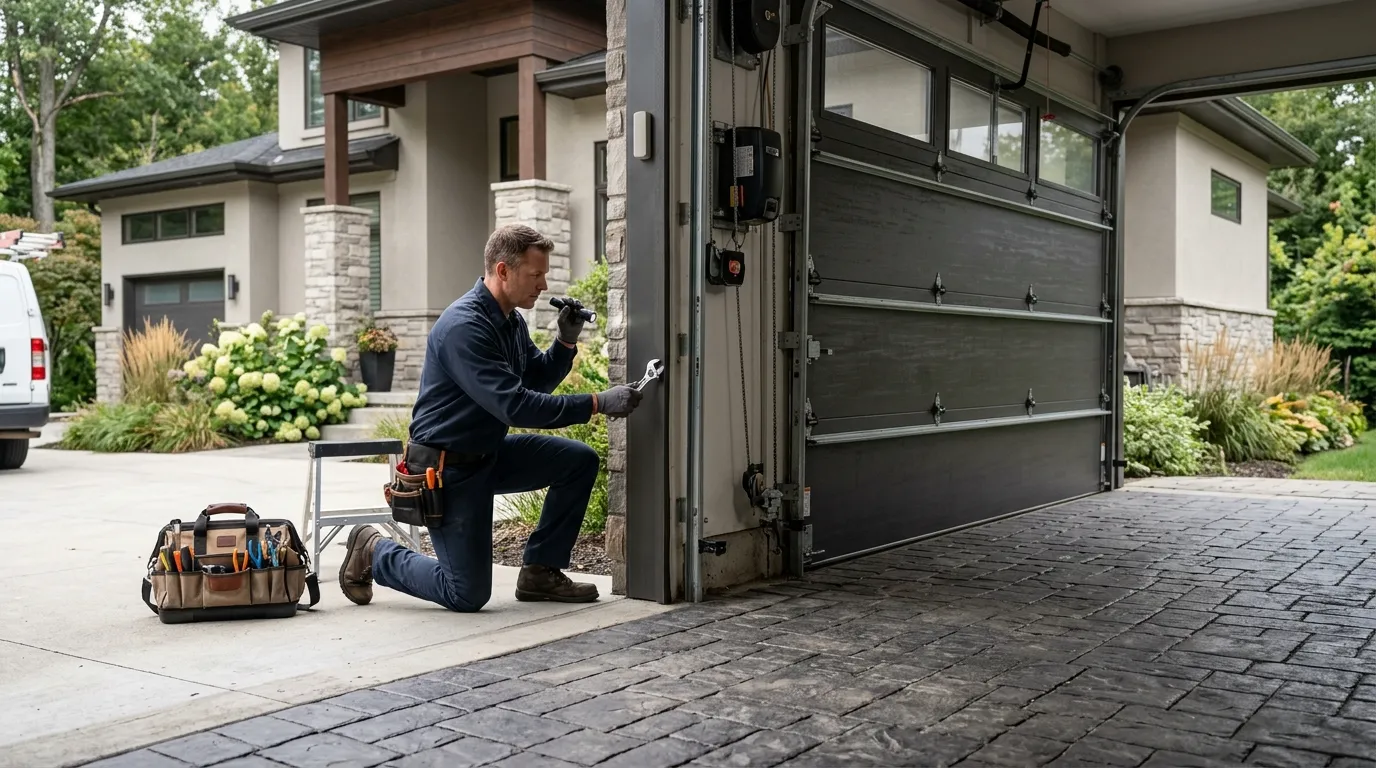
Older openings sometimes need the jamb or header shimmed to take a modern door square, and that adds an hour or two we build into the estimate rather than discover halfway through.
If the framing is badly out of square, that's a job we'll flag before we start rather than push through and leave you with a door that doesn't seal - a straightforward honest limit, not a reason to walk away from the job.
Weather plays into scheduling too. In a cold band like ours, we don't hang a new door in the middle of an ice event if it can wait a day, since cold steel and cold hands make for a worse seal at the header.
Pricing
We don't post a flat number for new installation here because door size, insulation level, and opener choice all move the cost, and a 1972-era opening sometimes needs framing work that a newer house wouldn't.
What we can tell you is how we price the trip: the 17-mile distance from Morgantown gets folded into one quote up front, not added as a surprise line later.
Pleasant Valley's median household income runs around $58,456, a bit below the wider service area's $60,791, and we quote jobs here the same way we do anywhere else in that area - by the door and the opening, not by the zip code.
If a repair to your existing door would run close to the cost of a new one, we'll say so plainly rather than sell a new install you don't need. We don't finance jobs in-house and we don't do same-day quotes over the phone for a job this size - we need to see the opening first, because guessing on a house this age costs both of us more than the drive does.
Local causes
With a median build year around 1972, a lot of Pleasant Valley's garage doors are on their second or third opener but still hanging off original track brackets or an undersized header opening that was never meant for a modern insulated door. That's usually what pushes a homeowner from repair to full replacement - the frame won't take the hardware a new door needs without some carpentry first.
The cold band this area sits in adds its own wear. Steel panels from the 1970s and 80s weren't built with the insulation ratings common now, so single-layer doors from that era warp and gap at the bottom seal after enough freeze-thaw cycles, and the old springs sized for a lighter door strain once a heavier replacement panel goes up without a matched spring swap.
We don't see rot or storm damage patterns here that we could point to with real numbers, so we won't invent one - what we do see, consistently, is 1970s framing meeting 2020s door weight, and that mismatch is the actual reason most new-install calls start.
Questions
No. We're based in Morgantown and drive out to Pleasant Valley, about 17 miles each way. We plan installation jobs as a single trip with the door and hardware loaded ahead of time so the distance doesn't turn into a second visit.
Maybe not without some work. Houses in Pleasant Valley mostly date to around 1972, and that framing sometimes runs narrower or shallower than what a modern insulated door needs. We check the opening before we bring the door out, and we'll tell you upfront if shimming or header work is needed.
Depends on the door. If the panel is original from the 1970s or 80s and the seal has gone, replacement usually makes more sense than patching it again. If it's a newer door with one bad part, repair is the better call - we'll tell you which situation you're in before quoting a full install.
Explore more
Ready when you are
Morgantown Garage Door Pros repairs and installs garage doors, springs and openers in Morgantown, WV and the surrounding area.