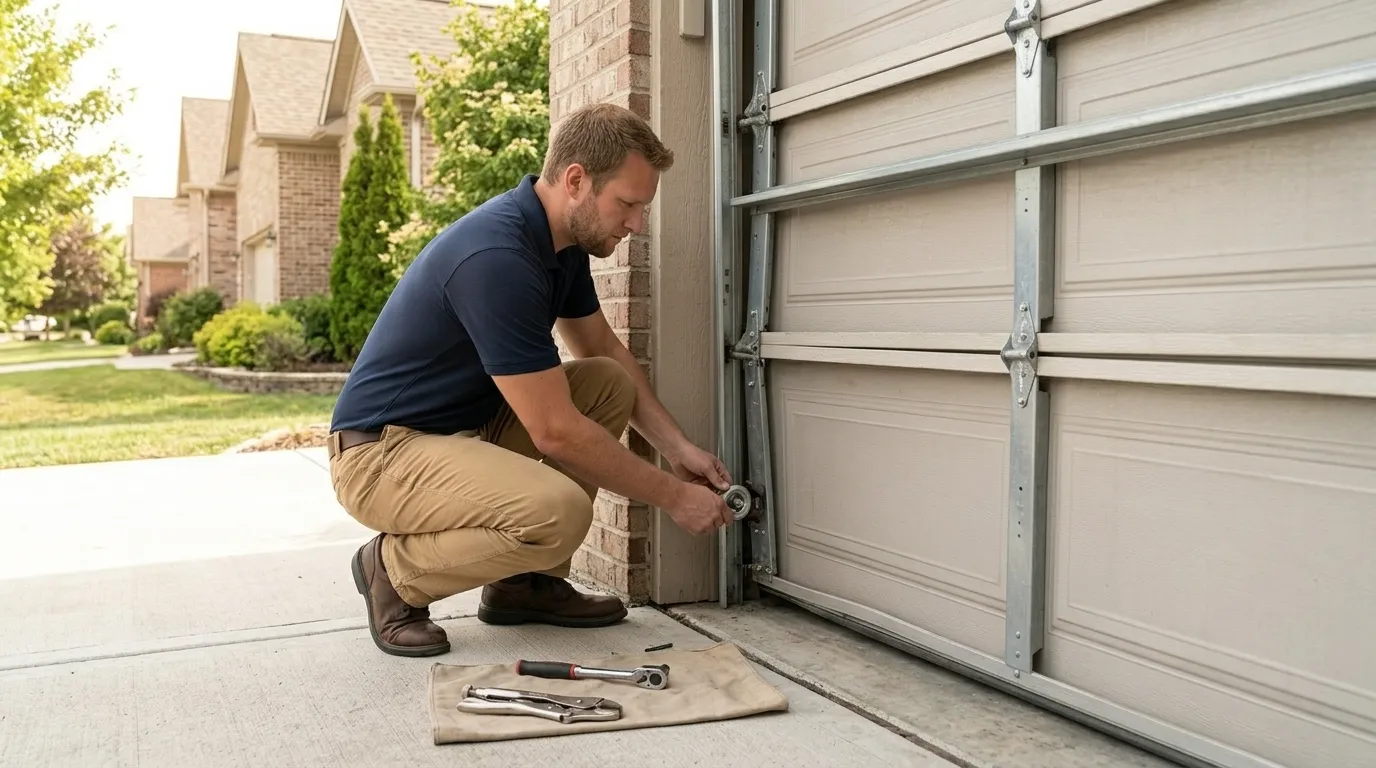
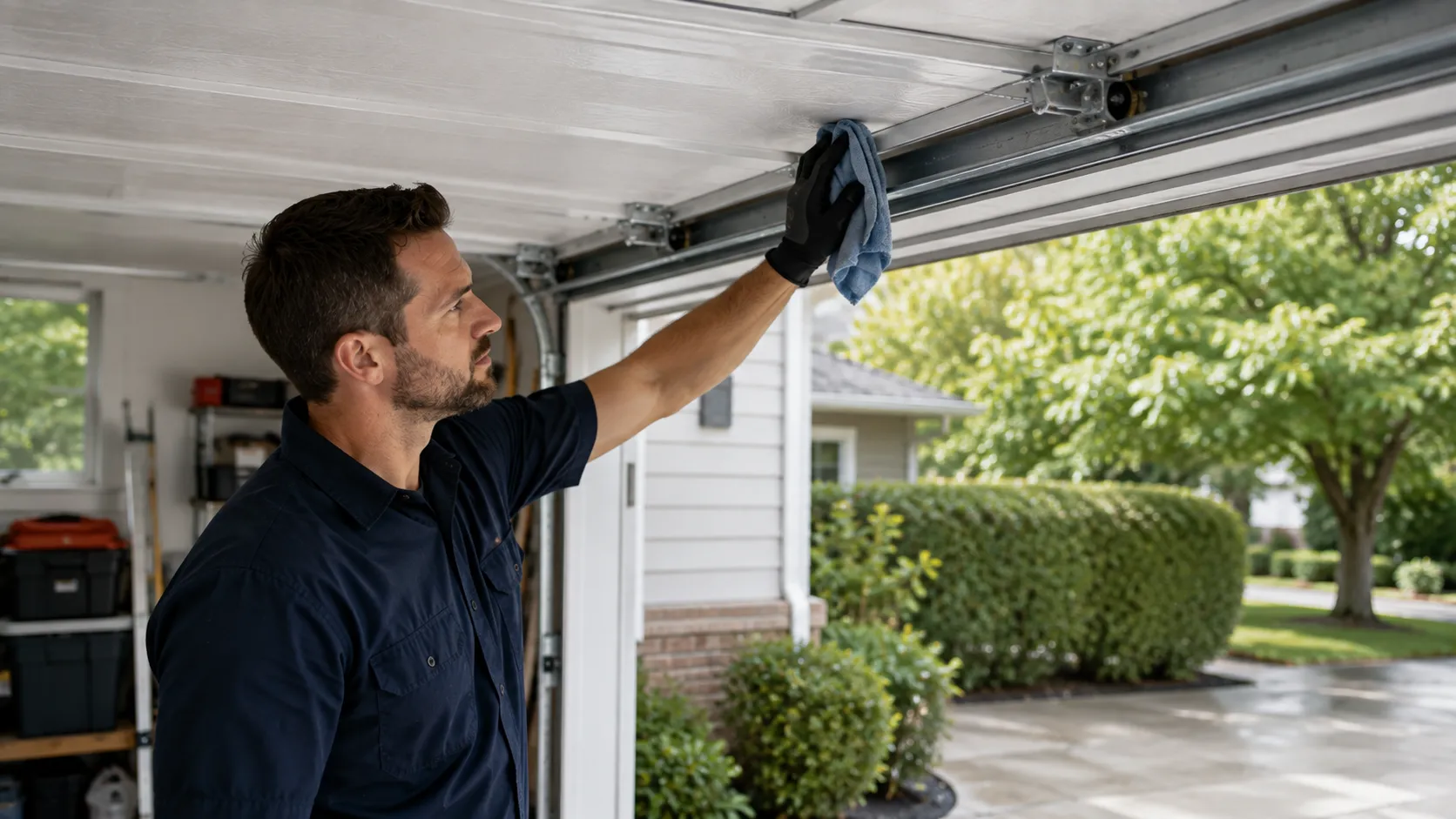
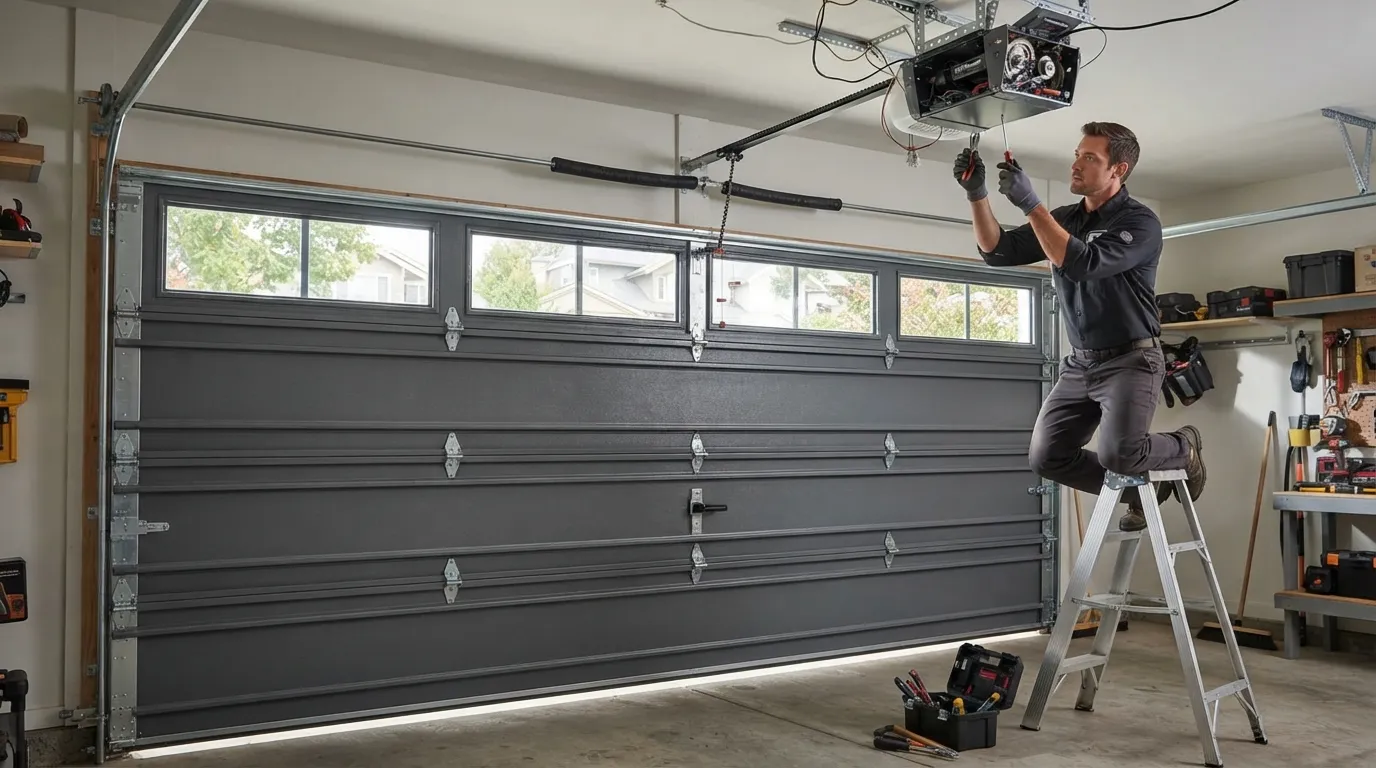
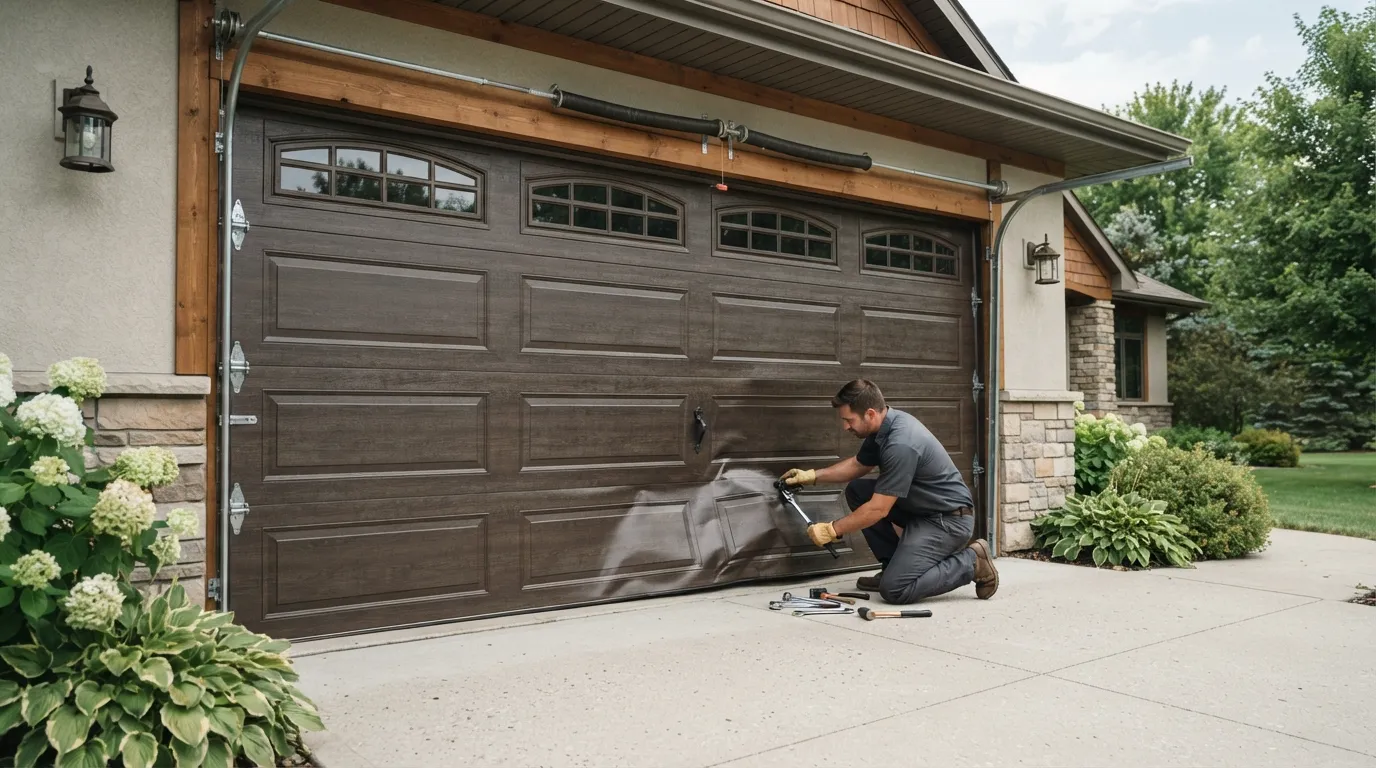
Winters in this part of the state fall into the severe end of the region's cold climate band. That's the real driver behind most of the roller calls we get, more than age or use. Steel rollers with open bearings - common on doors built through the 80s and 90s - pick up grit and then seize in cold weather because the lubricant thickens and stops doing its job. The roller doesn't roll anymore, it drags, and the flat spot it wears into itself gets worse every time the door cycles. On the newer stock built after 1993 that's typical of Cheat Lake, we still see steel rollers original to the house, just fewer of them, since a decent share of doors from that build era shipped with sealed units from the start. Either way, the failure pattern is the same: a rougher ride, a louder door, then a roller that jumps the track entirely. We don't have a count of how many doors in this specific pocket are original versus already replaced - that's not something we track by street, only by what we find on the call.